
- News
- City News
- nagpur News
- Govt must educate farmers' widow on rights, says VijayJawandhia
Trending
This story is from February 23, 2018
Govt must educate farmers' widow on rights, says VijayJawandhia
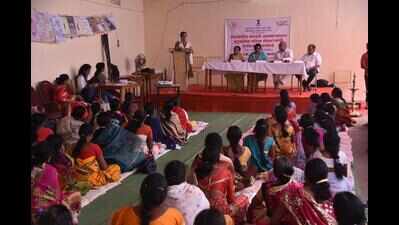
A two-day seminar has been organized for families affected by farmers’ suicides, by Prakriti and Mahila Kisan Adhikar Manch (Makaam), at Lohara off Koradi Road
Jawandhia was speaking at a two-day seminar organized for families affected by farmer suicides by Prakriti and Mahila Kisan Adhikar Manch (Makaam) at Lohara off Koradi Road.

Chairperson of State Women’s Commission Vijaya Rahatkar, divisional commissioner Anoop Kumar and chairman of Vasantrao Naik Sheti Swawalamban Mission Kishore Tiwari were the other speakers.
Explaining the background behind suicides by farmers, Jawandhia said such cases were first came to light in 1997. Most notable was Adilabad in Andhra Pradesh (now in Telangana) where around 2,000 farmers committed suicide. He said farmers there were paid less than the price agreed upon for their crops. It wasn’t until 2003-04 when the cases of farmer suicides in Maharashtra were reported.
By then, the state government had scrapped cotton procurement scheme, Jawandhia said. “Farmers were paid Rs1,800-2,000 per quintal with Rs500-600 in advance in the early 2000s. Once the original scheme was scrapped, the farmers were paid less for the produce. As the cost of production escalated, they had to take loan which they couldn’t pay,” he said.
Jawandhia urged the Women’s Commission chairperson to help educate them on
farm economics. He said, “People say society does not treat women equally, but we must ask whether or not the government is giving equal status to women in agriculture.”
Rahatkar stressed the need for people to change their mindset towards widows of farmers. She said, “Women are being discriminated against in their own household. There have been cases where in-laws have abandoned their sons’ widows and her children to fend for themselves. Not every mother-in-law takes care of her son’s wife after he dies. We need to change the way people think.”
Rahatkar said the commission is devising strategies to make women affected by farmers suicide know their rights. “NGOs, individuals and various organizations should help the families where the breadwinner committed suicide. As hard as they may try, many are unable to fulfil their children’s dreams,” she added.
Anoop Kumar said he has sought help from Prakriti and Makaam to acquire data of suicide-affected families. “Women working as farm labourers are being discriminated against. They are paid much less than their male counterparts and often subjected to harsh physical labour. The NGOs will compile the data in various districts and we will take a look at it and formulate a plan,” he said.
End of Article
FOLLOW US ON SOCIAL MEDIA










Hot Picks
TOP TRENDING
Trending Stories
In City
Entire Website
- Who were Barack Obama's challengers in 2008 and 2012 US presidential elections?
- 'A in INDIA alliance': Rahul Gandhi's slip-up during address to Indian-Americans goes viral
- Trump vs Harris: Betting markets reveal who’s expected to win the US presidential debate
- IGNOU December 2024 Term-End Exam: Registration Details, Important Dates, and Fee Structure
- Top 10 TED Talks to Boost Confidence and Success for Female Students
- Case against British Indian woman for Hindu prayers on beach collapses
- China refuses to sign agreement to ban AI from controlling nuclear weapons
- 'Not merely due to diet ...': Tammy Slaton on her weight loss journey after losing 226 kg
- Happy Teachers' Day: 8 most influential educators from the pages of history
- Harris says Trump ‘sold us out’ to China, hits out at Xi Jinping
- Monsoon maladies doomed Indus Valley 4,000 years ago, says study
- Earthquake of magnitude 5.8 strikes Pak, tremors felt in Delhi
- Why growing lure of protein supplements is worrying health experts
- Malaika Arora's father Anil Arora dies by suicide
- Shimla: Stir against mosque construction turns violent, protesters remove barricades
- Teen attempts suicide on railway tracks, loco pilot saves her
- Why we might not have any men left in just a few million years
- Apple announces price cut on iPhone 15, iPhone 14 models: New prices
- ACT Hockey Live: India lead Malaysia 1-0
- Harris campaign celebrates debate win; Trump calls it 'best ever'

Popular Categories
Hot on the Web
Top Trends
Trending Topics
Deepika PadukoneMalaika Arora Father DeathArbaaz KhanJayram RaviAishwarya Rai BachchanSlat WaterWeight GainGOAT CollectionVikas Sethi DeathMalayalam ProducersIndia's Best Dancer 4Monkeypox SymptomsDilli BabuIndian National ParksLaung BenefitsVikas SethiiPhone 16Dubai Princess Sheikha MahraBest AC in IndiaWordle Answer
Living and entertainment
Latest News
Manju Warrier expresses gratitude for birthday wishes: "Forever humbled and grateful"Haryana HPSC PGT admit card 2024 out at hpsc.gov.in: Direct link to download hall ticket here6,0,6,6,6 - Smashing Kieron Pollard rolls back the clock in Caribbean Premier League - WatchRelief for Amul in trademark war against Italian brandAfghanistan vs New Zealand: Why is Greater Noida stadium hosting a Test match?Shilpa Shetty and Raj Kundra spotted at the Siddhivinayak Temple; video insideDonald Trump and Kamala Harris shake hands as they meet for first time on debate stage: Watch the 'awkward' momentPrince William’s commitment to a lasting marriage with KateWhen Jaya Bachchan revealed she had a huge crush on Dharmendra, called him a 'Greek God' in front of Hema MaliniJr NTR starrer 'Devara: Part 1' completes censorship formalities; receives UA certificateGeorgia school shooting: Suspect's mom's call wasn't the only alert, multiple warnings overlooked before Apalachee high attack'Trump should not be telling a woman what to do with her body', says Kamala Harris on abortion rights during US presidential debateArbaaz Khan spotted outside Malaika Arora's house along with police after the tragic news of her father's demise by alleged suicide - WATCH VIDEOThe Luckiest Zodiac Signs: Who's Got the Midas Touch?When Malaika Arora missed her father Anil Arora and the whole family during Covid - a memory set in monochromeChess Olympiad: Strength of India squad raises hopes of higher-placed finishEU delivers $2.7 billion 'bad news' to Google, claims its 'shopping service' cost billionsAntony Varghese’ ‘Kondal’ bags U/A certificate, all set for September 13 release
Copyright © 2024 Bennett, Coleman & Co. Ltd. All rights reserved. For reprint rights: Times Syndication Service